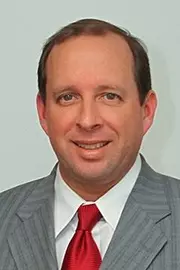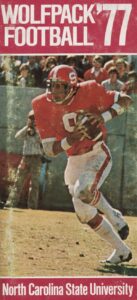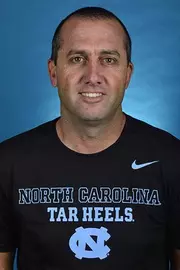
Our guest speaker for this meeting will be Shane Willis, former Carolina Hurricane player and now Hurricane’s broadcaster and more. Shane Willis is a former National Hockey League right winger best known for his time with the Carolina Hurricanes and his ongoing role in the growth of hockey across North Carolina.
Born June 13, 1977, in Edmonton, Alberta, Canada, Willis developed his game in the Western Hockey League, where he starred with the Prince Albert Raiders and Lethbridge Hurricanes. Over four junior seasons, he amassed an impressive 331 points (179 goals, 152 assists) in 265 games, establishing himself as one of the WHL’s most productive scorers of his era.
Willis was originally selected by the Tampa Bay Lightning in the third round of the 1995 NHL Entry Draft, but after not signing, he re-entered the draft and was chosen by the Carolina Hurricanes in the fourth round (88th overall) in 1997. His professional career began with the American Hockey League’s Beast of New Haven, where he enjoyed a breakout rookie season in 1998–99. That year he captured the Dudley “Red” Garrett Memorial Award as the AHL’s top rookie, a recognition that positioned him as one of Carolina’s top prospects.
Willis made his NHL debut with the Hurricanes during the 1998–99 season, but his true arrival came in 2000–01. In what would be his best NHL campaign, the 23-year-old winger scored 20 goals and added 24 assists for 44 points, earning a place on the NHL All-Rookie Team and finishing fifth in Calder Trophy voting. His combination of speed, scoring touch, and work ethic made him a valuable contributor during a period when the Hurricanes were establishing themselves in Raleigh. Over his NHL career, Willis played 174 games, recording 31 goals and 43 assists for 74 points.
After retiring from professional hockey in 2009, Willis transitioned seamlessly into a developmental and media role. In 2011, he was named Youth and Amateur Hockey Coordinator for the Carolina Hurricanes, helping expand youth participation in the sport across the region. He also became a familiar television presence as a color analyst for Hurricanes broadcasts, where his firsthand insight and approachable style have resonated with fans.
Today, he remains closely tied to the Hurricanes organization and the broader hockey community in North Carolina. Whether through youth development initiatives or his work behind the microphone, he continues to shape the sport’s growth in the region, leaving a legacy that extends well beyond his playing days.
Author: Dsp9048sjasdf
Our guest speaker for this meeting will be Dave Odom, Former Head Basketball Coach at Wake Forest, University of South Carolina and others. After graduating from East Carolina in 1969, Odom took a job at Durham High School, coaching there for seven years (1969–1976),where he was voted his league’s coach of the year five times.
Odom began his collegiate coaching career as an assistant at Wake Forest University in 1976 under head coach Carl Tacy. After three years at Wake Forest (1976–1979), Odom became the head coach at East Carolina University, where his squad compiled a 16-11 record, the university’s best since 1965. In his 12 seasons as Head Coach at Wake Forest, Odom compiled a record of 240-132, making him the second-highest winning coach in Wake Forest history, as well as the second highest winning percentage in school history. During this time, Wake Forest earned 7 straight NCAA Tournament appearances and one NIT championship. Odom was named ACC coach of the year in 1991, 1994 and 1995.
Odom left Wake Forest to accept the job as head coach of the University of South Carolina in 2001. During his tenure at South Carolina, his team earned one NCAA tournament bid, and made three appearances in the NIT, winning the championship in 2005 and 2006. He was named SEC Coach of the Year in 2004.
On January 2, 2008, Odom coached his 400th collegiate victory as a head coach. Later that month, on January 18, he announced that he would retire at the end of the 2007-2008 basketball season, his seventh at South Carolina. He coached his final game for USC on March 14, 2008, in the SEC tournament.
Mark Your Calendar
3/18/26 – Shane Willis, Carolina Hurricanes Broadcaster and former player
4/1/26 – Special Guest Speaker
4/15/26 – Special Guest Speaker
Our guest speaker for this meeting will be Rusty Herring, former NBA and NCAA Division I referee. Herring’s officiating journey placed him at center court during a time when basketball was evolving rapidly. The late 1980s and early 1990s marked a period of increasing athleticism, national exposure, and growing scrutiny of officiating standards. To earn assignments in this environment required not only mastery of the rulebook, but also composure, decisiveness, and the ability to command respect in arenas filled with passionate fans and elite competitors. Herring demonstrated those qualities consistently, which ultimately led to his appointment as an NBA referee — an achievement that represents the pinnacle of professional officiating.
His NBA tenure, spanning the late 1980s into the early 1990s, positioned him among a select group of officials entrusted to manage the pace and intensity of the world’s premier basketball league. Every game demanded split-second judgment and unwavering focus. Whether managing physical play in the paint or critical late-game situations, Herring’s presence on the floor reflected the league’s confidence in his professionalism and ability to maintain competitive balance.
Equally important was his work in Division I college basketball, where Herring officiated numerous high-profile contests featuring nationally recognized programs. College arenas often present a unique intensity — a blend of tradition, rivalry, and youthful energy — and officials must navigate that atmosphere with clarity and poise. Herring became a familiar and trusted figure in these settings, contributing to games that shaped conference standings and postseason dreams.
Beyond the assignments themselves, Herring represented a generation of officials committed to improving the craft of officiating. He understood that the game was changing and believed referees must evolve alongside it through preparation, training, and continuous learning. His perspective reflected a professional mindset focused not merely on enforcing rules, but on supporting the integrity and flow of the sport.
Mark Your Calendar
(All Meetings at Croasdaile Country Club)
3/4/26 – Dave Odom, former College basketball coach
3/18/26 – Shane Willis, former Carolina Hurricane
4/6/26 – Special Guest Speaker
Corey Muscara stepped into the spotlight in June 2025 when he was officially introduced as the 26th head coach in Duke Blue Devils baseball history — a milestone marking his first head coaching role at the NCAA Division I level.
Born and raised in Manchester, New Hampshire, Muscara’s baseball roots go back to his playing days as a collegiate pitcher. He began his college career at Siena College before transferring to Franklin Pierce University, where he served as team captain in 2009 and helped lead the Ravens to back-to-back Northeast-10 Tournament titles and a regional championship appearance. After earning his degree in history from Franklin Pierce in 2009, Muscara turned his competitive drive and leadership instincts toward coaching — and the rest is baseball history.
Muscara’s coaching journey began in 2010 at Southern New Hampshire University, where he cut his teeth as a pitching coach and recruiting coordinator. During his second stint there in 2012, his staff led Division II in ERA and strikeouts per nine innings while the team reached the Division II College World Series and posted a school-record 43 wins — a sign of the pitching pedigree he’d build his career on.
After a season at Binghamton University in 2011, Muscara moved to St. John’s University (2013–2017), where he helped mold one of college baseball’s most respected pitching groups. Under his guidance, nine pitchers were selected in the MLB Draft, and the Red Storm consistently ranked among the nation’s top teams in ERA and strikeouts — including a top-10 ERA finish in 2017 and NCAA Tournament appearances in 2015 and 2017.
From 2018 to 2021, Muscara took his talents to the University of Maryland, serving as the Terrapins’ pitching coach. There, he played a key role in helping Maryland achieve back-to-back 30-win seasons for the first time in years and brought in a top-10 recruiting class highlighted by promising arms that reinforced his reputation as both a developer of talent and a recruiter.
It was his next stop that truly cemented his national reputation. From 2022 to 2025, Muscara served as pitching coach at Wake Forest University, where his staff helped the Demon Deacons average 43 wins per season and made a landmark run to the College World Series in 2023 — the program’s first trip since 1955. That season, Wake Forest’s pitching unit led the nation in ERA, strikeouts, and strikeout-to-walk ratio, earning Muscara D1Baseball’s Assistant Coach of the Year honor. Even in subsequent years, his staffs remained among the nation’s elite in strikeouts and shutouts.
At Duke, Muscara inherits a program with recent success in the ACC and NCAA tournaments but also one in transition after a coaching change and player movement.
Off the field, Muscara is a family man — married to his wife Suzie, and a father to three children. His path to Duke underscores a lifetime in the game: from a kid with a glove in New Hampshire to one of the most respected pitching minds in college baseball, now leading the Blue Devils with vision and enthusiasm.
Mark Your Calendar
(All Meetings at Croasdaile Country Club)
2/18/26 – Gina Kim, LPGA Tour Player
3/4/26 – A Special Guest Speaker
3/18/26 – A Different Special Guest Speaker
1-21-26, Art Chansky, Author
Our guest speaker for this meeting will be Art Chansky, a renowned author, journalist, and storyteller, has long been celebrated as one of the most insightful chroniclers of college sports and Southern culture. Living in Chapel Hill, Chansky’s career has been marked by a singular devotion to telling the stories of the people, places, and passions that define his home. With a distinctive narrative voice and a passion for uncovering the personal dimensions behind public legends, Chansky has built a reputation as an essential historian of the University of North Carolina (UNC) and the world that surrounds it.
Chansky’s career began in journalism, a field that allowed him to merge his passions for writing and sports. After graduating from UNC, he took on roles in various local and regional publications, steadily building a reputation for insightful reporting and nuanced profiles. His writing combined factual rigor with vivid storytelling, capturing not only the events of the day but also the emotional undercurrents that animated them.
Chansky grew up at a time when college basketball was beginning to shape the cultural landscape of the American South. He attended UNC, immersing himself in both the academic and sporting life of the campus. It was during these formative years that Chansky first encountered the personalities and institutions that would become central to his later works.
Chansky’s bibliography is extensive, with his writing spanning decades and addressing a range of topics, though he is best known for his works on UNC basketball. In addition to his books, Chansky has contributed essays, columns, and features to numerous newspapers and magazines. His voice is a familiar one in the North Carolina media landscape, where he has appeared on radio programs, podcasts, and panel discussions.
Mark Your Calendar
(All Meetings at Croasdaile Country Club)
2/4/26 – Corey Muscara, Head Baseball Coach, Duke
2/18/26 – Special Guest Speaker
3/4/26 – A Different Special Guest Speaker
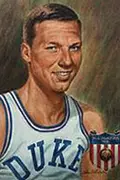
Our guest speaker for this meeting will be Jack Marin, former Duke and NBA basketball standout.
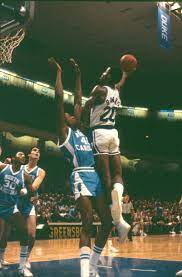
Marin’s game took shape at Duke University, where he played under Vic Bubas during the program’s ascent to national prominence. At 6’6″ with a left-handed stroke that became his trademark, he quickly established himself as a smart, reliable, matchup-stretching forward. Marin was known as “Mr. Consistency” to Blue Devil fans. He played in all 85 games during his three year career and excelled in all phases of the game. He still ranks as one of the greatest collegiate shooters of all-time and stands tenth on Duke’s al-time scoring list. Marin led the ’66 Blue Devils in scoring and was at his best in the big games. In Duke’s two-game sweep of 1965 national champion UCLA, Marin scored 43 points in a fine all-around floor performance. Later against number three-ranked Michigan he scored 30 points while matched against Cazzie Russell. His consistent play earned him All-America honors his senior year and all-ACC honors as a junior. He was a two-time All-ACC selection and helped lead Duke to the 1966 Final Four, cementing his status as one of the top collegiate players in the country. Marin was inducted into the Duke Athletics Hall of Fame in 1978.
The Baltimore Bullets selected Marin fifth overall in the 1966 NBA Draft, and he wasted no time proving he belonged. He earned NBA All-Rookie honors in 1967, showcasing a polished mid-range game and a knack for scoring without unnecessary flash.
By the early 1970s, Marin had developed into one of the league’s most efficient forwards. His 1970–71 season was his best statistically, averaging 21.0 points and 6.7 rebounds per game. He earned two NBA All-Star selections (1972 and 1973) and was among the league’s most reliable free-throw shooters, leading the NBA in free-throw percentage in 1971.
Marin’s most memorable postseason run came during the 1971 NBA Finals, where the Bullets faced the powerhouse Milwaukee Bucks led by Kareem Abdul-Jabbar and Oscar Robertson. Though the Bullets lost the series, Marin shined, averaging nearly 20 points per game and demonstrating his ability to thrive under playoff pressure. His calm demeanor, high basketball IQ, and accuracy under duress became trademarks of his postseason reputation.
In 1973, Marin became part of a major NBA transaction when Baltimore traded him to the Houston Rockets in the deal that sent Elvin Hayes to the Bullets. Marin brought veteran leadership and steady scoring to Houston, where he averaged in the mid-teens and helped guide a developing roster featuring Calvin Murphy and Rudy Tomjanovich. His professionalism and composure made him a stabilizing presence.
He later played for the Buffalo Braves, contributing veteran shot-making alongside young star Bob McAdoo, and then finished his career with the Chicago Bulls during the 1976–77 season. Over 11 NBA seasons, Marin scored 12,541 points, averaged double-figure scoring nearly every year, and maintained excellent shooting percentages — especially from the free-throw line, where he ranked among the most dependable shooters of his era.
Marin’s career also stood out for his remarkable balance. While still playing, he studied law — a sign of his discipline and long-term thinking. After retiring, he became an attorney and a significant advocate for retired NBA players, applying the same steady leadership he showed on the court.
Mark Your Calendar
(All Meetings at Croasdaile Country Club)
12/17/25 – Durham Sports Club’s Christmas Event
1/5/25 – NO MEETING (Croasdaile will be closed that week)
1/19/25 – Special Guest Speaker
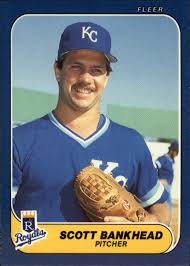
Scott Bankhead is a former Major League Baseball right-handed pitcher who had a ten-year big-league career. Bankhead made his major-league debut on May 25, 1986, with the Royals, after a swift rise through the minors. He finished his rookie season with an 8-9 record and a 4.61 ERA in 24 appearances (17 starts).
Shortly after, he was traded to the Seattle Mariners for the 1987 season, where he spent five seasons. His performance peaked in 1989: a 14-6 record with a 3.34 ERA as a full-time starter, during a season in which his team wasn’t particularly strong—but he was. Injuries (notably shoulder trouble) curtailed his workload thereafter.
In 1992 he shifted into a relief role with the Cincinnati Reds and rejuvenated his career, posting a 10-4 record with a 2.93 ERA in 54 games. He spent two seasons in relief with the Boston Red Sox (1993-94) and closed out his big-league time with the New York Yankees in 1995. Over his MLB career he appeared in 267 games (110 starts), amassed a 57-48 win-loss record and a 4.18 ERA with 614 strikeouts.
Bankhead was born in Raleigh and raised in Reidsville, North Carolina, where he starred at Reidsville High School. As as a senior, he struck out an astounding 176 batters in just 76 innings and posted a 0.37 earned-run average—earning high school national recognition. He chose to attend the University of North Carolina at Chapel Hill (UNC) rather than sign immediately, and there he flourished. Over three years with the Tar Heels he compiled a 24-3 record, went 20-0 over his final two seasons, helped lead UNC to three straight ACC championships, and earned All-American honors twice. During the summers of 1982 and 1983 he pitched with the Wareham Gatemen of the Cape Cod League, where he developed a sharp slider and earned all-star recognition.
In 1984, Bankhead represented the United States as a member of the U.S. baseball team at the 1984 Summer Olympics (when baseball was a demonstration sport). He appeared in two games, logged 9⅔ innings and allowed a just a single earned run. That same year, he was selected 16th overall in the first round of the MLB Draft by the Kansas City Royals
Following his playing days, Bankhead returned to North Carolina and established the North Carolina Baseball Academy, providing training and mentorship to young players. His career has been recognized via induction into the North Carolina Sports Hall of Fame and the American Legion Hall of Fame.
Mark Your Calendar
(All Meetings at Croasdaile Country Club)
12/3/25 – Jack Marin, Duke and NBA Star
12/17/25 – Durham Sports Club’s Christmas Event
1/5/25 – NO MEETING (Croasdaile will be closed that week)
Our guest speaker for this meeting will be Tony Haynes, NC State’s color analyst for men’s basketball, sideline reporter for the football broadcasts, and host for the TV and radio coaches shows for both football and men’s basketball.
Haynes attended NC State University, graduating in 1984. While at NC State, he was deeply involved in campus radio, serving as Sports Director for WKNC-FM from 1982 to 1984. Those early years calling Wolfpack games and covering campus athletics sparked a lifelong connection to the school and its teams.
Following graduation, Haynes launched his professional career with WKIX 850 AM in Raleigh, working as both a disc jockey and sports reporter. This period helped him develop the mix of technical skill and quick-thinking presence that would later define his on-air style.
In 1987, Haynes expanded his career into collegiate athletics broadcasting, joining the Duke Blue Devils Football Radio Network as a sideline reporter. His versatility and insight led to another opportunity in 1993, when he joined the Duke Men’s Basketball radio broadcast team as a color analyst. Those experiences honed his storytelling and courtside reporting instincts.
Alongside his work at Duke, Haynes served as a sports anchor and reporter for the North Carolina News Network beginning in 1989. For more than a decade, he delivered statewide sports coverage, reported from ACC events, and built a respected reputation for accuracy and professionalism in North Carolina media.
In 1998, Haynes came full circle, returning to his alma mater as part of the Wolfpack Sports Network. Over nearly three decades, he became one of the most familiar voices in NC State athletics. His roles included:
• Sideline reporter for NC State football broadcasts
• Color analyst for men’s basketball
• Play-by-play announcer for select baseball games
• Host of NC State’s television and radio coaches’ shows for football and basketball.
His deep knowledge of Wolfpack history, rapport with coaches and players, and easy-going but precise commentary made him a trusted presence for fans.
During the 2004–05 season, Haynes received the ACC Sports Journal’s “Best Color Analyst” award for his basketball work—one of several acknowledgments of his broadcast excellence and credibility in ACC circles.
In August 2025, Haynes announced he would retire following the 2025 NC State football season, concluding a 28-year run with the Wolfpack Sports Network.
Mark Your Calendar
(All Meetings at Croasdaile Country Club)
11/19/25 – Scott Bankhead, former MLB Pitcher
12/3/25 – Special Guest Speaker
12/17/25 – Durham Sports Club’s Christmas Event
Our guest speaker for this meeting will be Trei Oliver, Head Football Coach at NC Central University. Since taking the reins at NCCU, the Eagles have seen stunning success, including winning the 2022 HBCU National title with a victory over Jackson St in the Celebration Bowl; making the FCS playoffs for their first-ever appearance in 2023; and rolling to an 8-3 record in 2024. Oliver received MEAC Coach of the Year honors in 2022 and 2023.
Growing up in a family deeply rooted in NCCU—his parents, Colon and Evelyn Oliver, were both alumni, and his father played wide receiver for the Eagles in the 1960s—Oliver’s connection to the institution was almost inevitable.
Oliver played football at NCCU from 1994 to 1997, handling dual roles as a defensive back and punter. Over his collegiate career, he was selected all-conference or all-region in multiple seasons. In 1997, he posted a punting average of 41.7 yards, ranking among the best in NCCU history. He also contributed significantly on defense, finishing his playing days among NCCU’s career leaders in tackles and passes defended.
Oliver graduated from NCCU in 1998 with a bachelor’s degree in physical education. Later, he earned a master’s degree in criminal justice from Grambling State University in 2010.
Oliver launched his coaching career in 1999 at Delaware State University, where he served as defensive backs coach and assistant special teams coordinator from 1999 to 2002.
In 2003, he returned to NCCU as an assistant, wearing multiple hats: coaching defensive backs, wide receivers, overseeing special teams, and acting as recruiting coordinator. During his stint from 2003 to 2006, the Eagles won back-to-back CIAA (Central Intercollegiate Athletic Association) championships (2005, 2006), and in 2006 the team achieved an 11–1 record, earning an HBCU national title.
From 2007 to 2010, Oliver joined Grambling State University as outside linebackers coach, recruiting coordinator, and special teams coordinator. At Grambling, the staff won two SWAC West Division championships and secured the SWAC championship and national recognition in 2008.
He next moved to North Carolina A&T (2011–2015) as outside linebackers coach and recruiting coordinator. During his tenure, the Aggies shared MEAC championships in 2014 and 2015, and won the inaugural Celebration Bowl in 2015, earning a black college national title.
From 2016 through 2018, Oliver was the defensive coordinator and safeties coach at Southern University. In his final season, Southern captured the SWAC West Division championship and competed in the SWAC title game.
On December 13, 2018, NCCU announced the hiring of Oliver as its 24th head football coach, bringing an alum’s flair to the role. His contract began January 2, 2019. Since stepping into the head-coach role, Oliver has posted a cumulative record of 37–21 through the first five seasons (2019, 2021–2024). (There was no 2020 season due to COVID-19.) Under his leadership:
• In 2022, the Eagles went 10–2, shared the MEAC title, and defeated Jackson State in the Celebration Bowl to claim an HBCU national title. Oliver was named MEAC Coach of the Year.
• In 2023, NCCU went 9–3, again posting strong conference play and making its first-ever appearance in the FCS Playoffs. Oliver earned another MEAC Coach of the Year nod.
• In 2024, the team went 8–3 overall and 4–1 in MEAC.
Under Oliver, NCCU has consistently posted a 4–1 MEAC record in multiple seasons, and his teams have often secured non-conference victories over strong opponents.
Mark Your Calendar
(All Meetings at Croasdaile Country Club)
11/5/25 – A Special Guest Speaker
11/19/25 – Scott Bankhead, former MLB Pitcher
12/3/25 – Another Special Guest Speaker
12/17/25 – Durham Sports Club Annual Christmas event
Our guest speaker for this meeting will be Johnny Evans, former football standout at NC State and NFL player.
Evans was the Quarterback at North Carolina State University in the mid-1970s, where he played under two very different head coaches—Bo Rein and Lou Holtz, yet still lettered all four years (1974-77). In his senior season, 1977, he led the Wolfpack to an 8-4 record, and capped his college career with a strong showing in the 1977 Peach Bowl, where he was named MVP after throwing for 202 yards and rushing for 62 more in NC State’s win over Iowa State.
His performance at NC State earned him selection in the second round of the 1978 NFL Draft, 39th overall, by the Cleveland Browns. With the Browns, Evans’ primary NFL role was as a punter, though he remained listed as a quarterback/punter. He played three seasons (1978-1980), totaling 48 regular-season games. As a punter for Cleveland, Evans handled 214 punts, totaling 8,463 yards for an average of about 39.5 yards per punt. His longest punt in the NFL was 65 yards. Though he was rostered as a quarterback, he never took a snap in a regular-season game at QB for the Browns.
After his NFL stint, Evans continued his professional playing career in the Canadian Football League (CFL). He played for the Montreal Concordes (also called Alouettes/Concordes) and later the Edmonton Eskimos. In Canada, he saw more action as a quarterback and also handled kicking duties.
Following his playing days, Evans shifted into broadcasting. Since 1996 he has served as a radio color commentator ‒ sometimes called game-day analyst ‒ for NC State Wolfpack football.
Evans was born in High Point, North Carolina. From those early days at T. Wingate Andrews High School, Evans showed the dual gifts of athleticism and leadership—he was a standout prep All-American quarterback, setting the stage for his notable football journey.
Evans is father to quadruplets, two of whom also played football for NC State, continuing the family ties to the Wolfpack program.
Mark Your Calendar
(All Meetings at Croasdaile Country Club)
10/15/25 – A Special Guest Speaker
11/5/25 – A Different Special Guest Speaker

11/19/25 – Scott Bankhead, former MLB Pitcher