




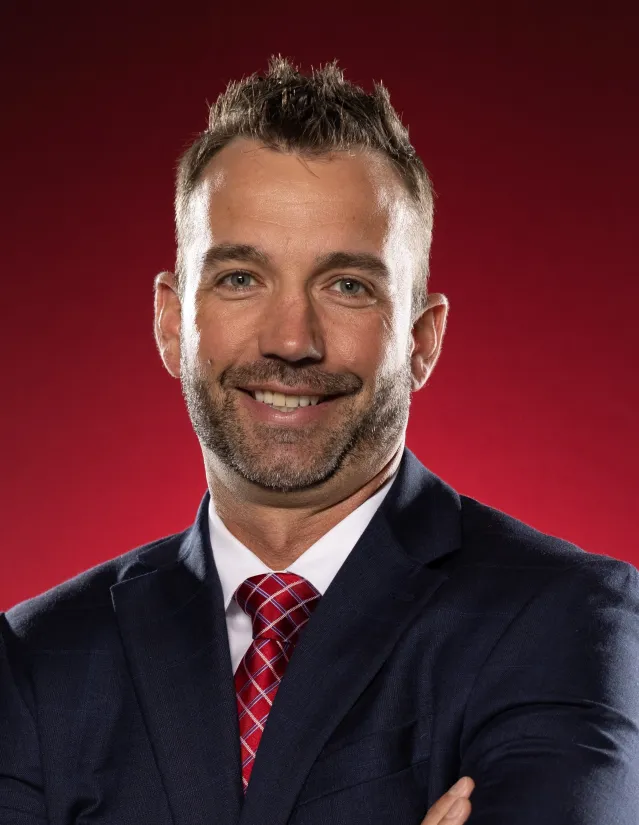
 Our guest speaker for this meeting will be Shane Willis, former Carolina Hurricane player and now Hurricane’s broadcaster and more. Shane Willis is a former National Hockey League right winger best known for his time with the Carolina Hurricanes and his ongoing role in the growth of hockey across North Carolina.
Born June 13, 1977, in Edmonton, Alberta, Canada, Willis developed his game in the Western Hockey League, where he starred with the Prince Albert Raiders and Lethbridge Hurricanes. Over four junior seasons, he amassed an impressive 331 points (179 goals, 152 assists) in 265 games, establishing himself as one of the WHL’s most productive scorers of his era.
Willis was originally selected by the Tampa Bay Lightning in the third round of the 1995 NHL Entry Draft, but after not signing, he re-entered the draft and was chosen by the Carolina Hurricanes in the fourth round (88th overall) in 1997. His professional career began with the American Hockey League’s Beast of New Haven, where he enjoyed a breakout rookie season in 1998–99. That year he captured the Dudley “Red” Garrett Memorial Award as the AHL’s top rookie, a recognition that positioned him as one of Carolina’s top prospects.
Willis made his NHL debut with the Hurricanes during the 1998–99 season, but his true arrival came in 2000–01. In what would be his best NHL campaign, the 23-year-old winger scored 20 goals and added 24 assists for 44 points, earning a place on the NHL All-Rookie Team and finishing fifth in Calder Trophy voting. His combination of speed, scoring touch, and work ethic made him a valuable contributor during a period when the Hurricanes were establishing themselves in Raleigh. Over his NHL career, Willis played 174 games, recording 31 goals and 43 assists for 74 points.
After retiring from professional hockey in 2009, Willis transitioned seamlessly into a developmental and media role. In 2011, he was named Youth and Amateur Hockey Coordinator for the Carolina Hurricanes, helping expand youth participation in the sport across the region. He also became a familiar television presence as a color analyst for Hurricanes broadcasts, where his firsthand insight and approachable style have resonated with fans.
Today, he remains closely tied to the Hurricanes organization and the broader hockey community in North Carolina. Whether through youth development initiatives or his work behind the microphone, he continues to shape the sport’s growth in the region, leaving a legacy that extends well beyond his playing days.
Categories